



Kandinsky & Klee · New collection
Geometry.
Colour.
Emotion.
Three new designs inspired by the pioneers of abstraction — Wassily Kandinsky and Paul Klee.
In the 1920s, two artists shared a teaching floor at the Bauhaus and a radical belief: colour wasn't decoration. It was language. Their work becomes something you can wear.
The collection
Three works. Two artists. One collection.
Available as individual socks and in three packs.
Filters


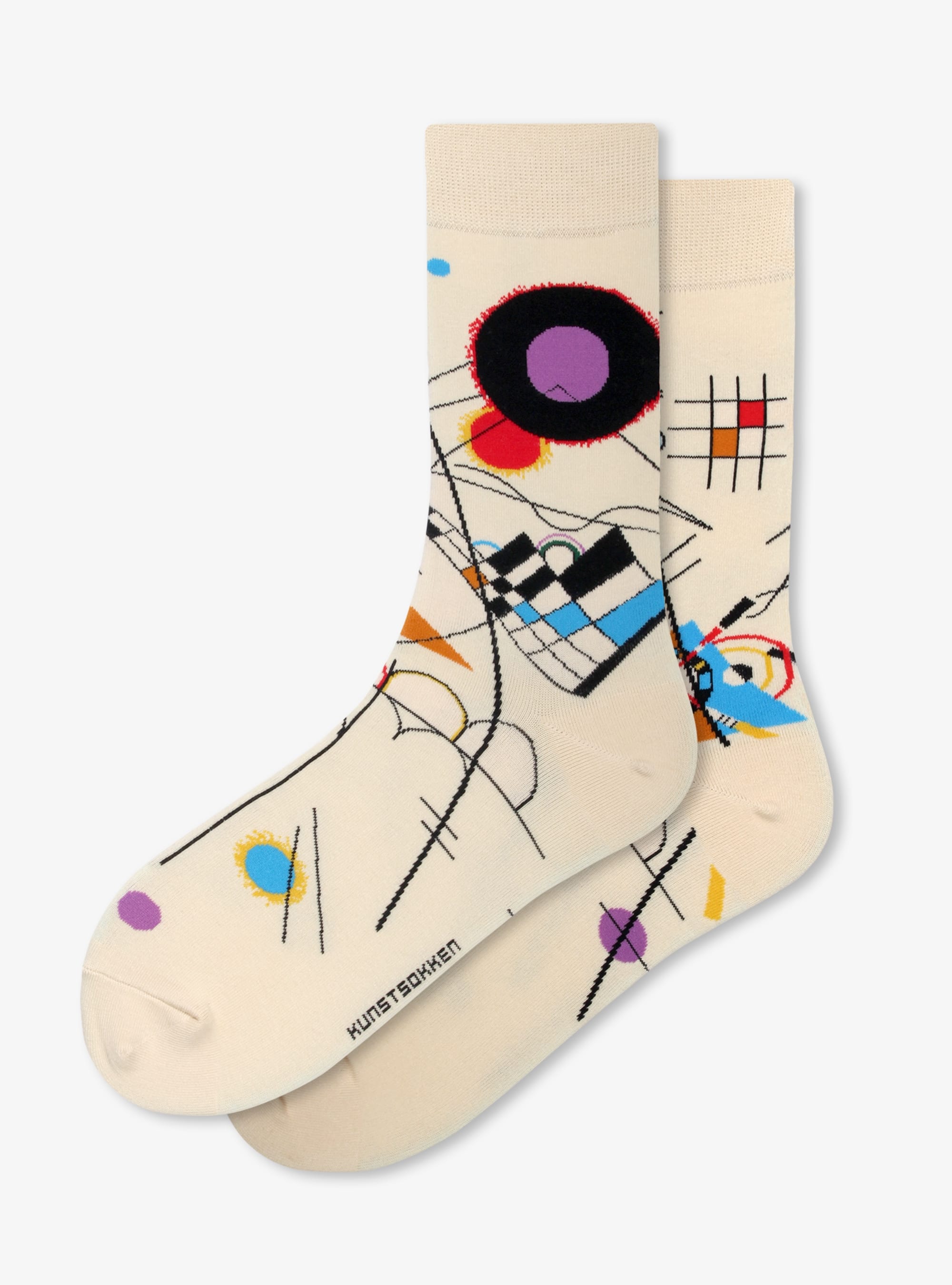
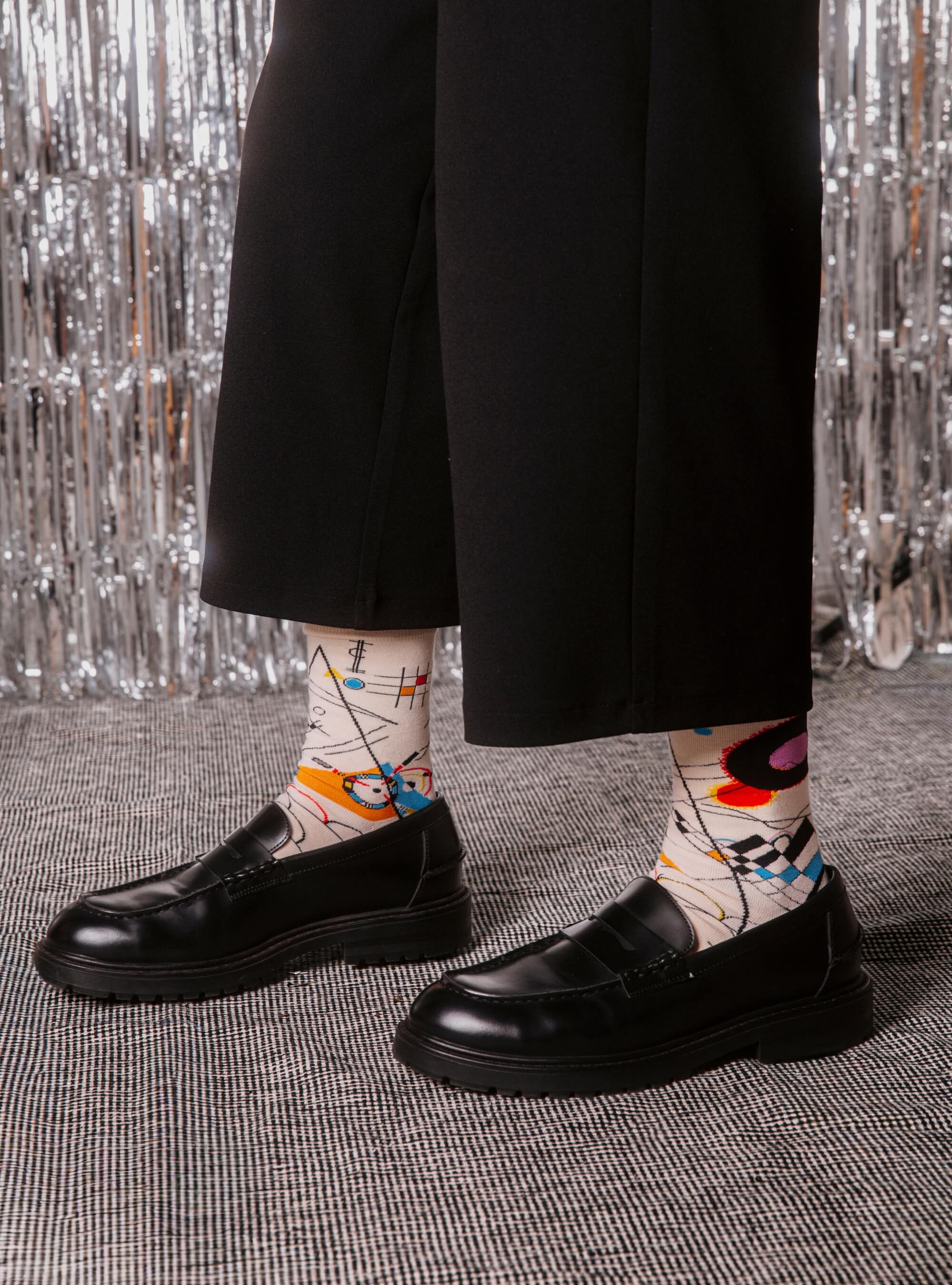

Color Study: Squares with Concentric Circles, 1913 · Städtische Galerie im Lenbachhaus, Munich
Wassily Kandinsky · 1913
He painted it as a personal note. It became the most recognised abstract painting ever made.
Farbstudie Quadrate was never intended to be shown. Kandinsky created it as a private colour reference, a visual study while working on his larger compositions. He was exploring how colours behaved next to each other, how they clashed or harmonised.
What drove that curiosity was remarkable: Kandinsky literally heard sounds when he saw colours. Bright yellow rang like a high note, deep blue like something low and full. Twelve squares, twelve unique colour combinations. It is over a hundred years old and still looks like it was made yesterday.
Watercolour, gouache and crayon · Städtische Galerie im Lenbachhaus, Munich · Part of the Kandinsky 2-pack & Newcomers 3-pack

Castle and Sun (Burg und Sonne), 1928 · Private collection
Paul Klee · 1928
A city that never existed. A sunset you can almost feel.
Paul Klee painted this work in 1928 while teaching at the Bauhaus, the same school where he worked alongside Kandinsky. The painting shows a city that never existed: towers and walls made of triangles, rectangles and blocks of warm colour, with an orange sun in a deep red sky above.
Klee wanted you to feel the warmth of a setting sun on old stone walls. Playful and dreamlike, but also very precisely built. A world you instantly recognise, even though it exists nowhere.
Oil on canvas · 54 × 62 cm · Private collection · Part of the Klee 2-pack & Newcomers 3-pack

Senecio (Head of a Man Going Senile), 1922 · Kunstmuseum Basel, Switzerland
Paul Klee · 1922
Half mask. Half memory. Completely unforgettable.
Paul Klee painted Senecio in 1922 while working at the Bauhaus in Weimar. You see a round face, built up from patches of orange, pink, yellow and white. The eyes are not level. The expression is hard to place: it sits somewhere between calm and confusion.
The official name is Head of a Man Going Senile, but the face feels both childlike and wise at the same time. There is something in it that stays with you. The work now hangs in the Kunstmuseum Basel in Switzerland.
Oil on canvas on panel · 40.5 × 38 cm · Kunstmuseum Basel, Switzerland · Part of the Klee 2-pack & Newcomers 3-pack
Art at your feet
These works become something you can wear.
Three designs. Organic cotton. Delivered in 2–3 working days.
Kunstsokken · Wearable art · Made from organic cotton