



























Ancient Egypt
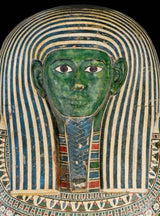
In a quiet gallery in Leiden stands the sarcophagus of Peftjauneith, 2,600 years old. His face is painted green, his chest covered in flowers.
The collection
Five socks based on the sarcophagus and the little hippo, knitted together with the museum in 80% organic cotton. Choose a set, or pick your favourites one by one.


 Rijksmuseum van Oudheden × Kunstsokken
The whole collection, 5 pairs
Sons of Horus, Floral Collar, Egyptian Birds and both hippos
View the set49,00 zł per pair
Free shipping
Rijksmuseum van Oudheden × Kunstsokken
The sarcophagus, 3 pairs
Sons of Horus, Floral Collar and Egyptian Birds
View the set53,00 zł per pair
1-year guarantee against holes
Or pick them one by one
Autumn offerBuy 5 pairs, get 2 free. Single pairs count, also together with other designs.




Who was Peftjauneith?
He managed the lands of a temple, probably in Sais, in the north of Egypt. His name means “his breath comes from Neith”, the goddess of that city. On his sarcophagus his face is painted green, like that of Osiris, the god who conquered death. In 1829 the sarcophagus came to Leiden, with his mummy still inside.
On display at the Rijksmuseum van Oudheden, Leiden
“Out by day, and home again at night.”

On the side of the sarcophagus
Sons of Horus
The guardians of the afterlife
Along the side of the sarcophagus stand the four Sons of Horus, brothers and protective gods. Each of them watched over one part of the body.
Duamutef, with the head of a jackal, guarded the stomach. Qebehsenuef, with the head of a falcon, the intestines. The hieroglyphs around them name Peftjauneith and promise him their protection. On the sock they stand just as they were painted 2,600 years ago.
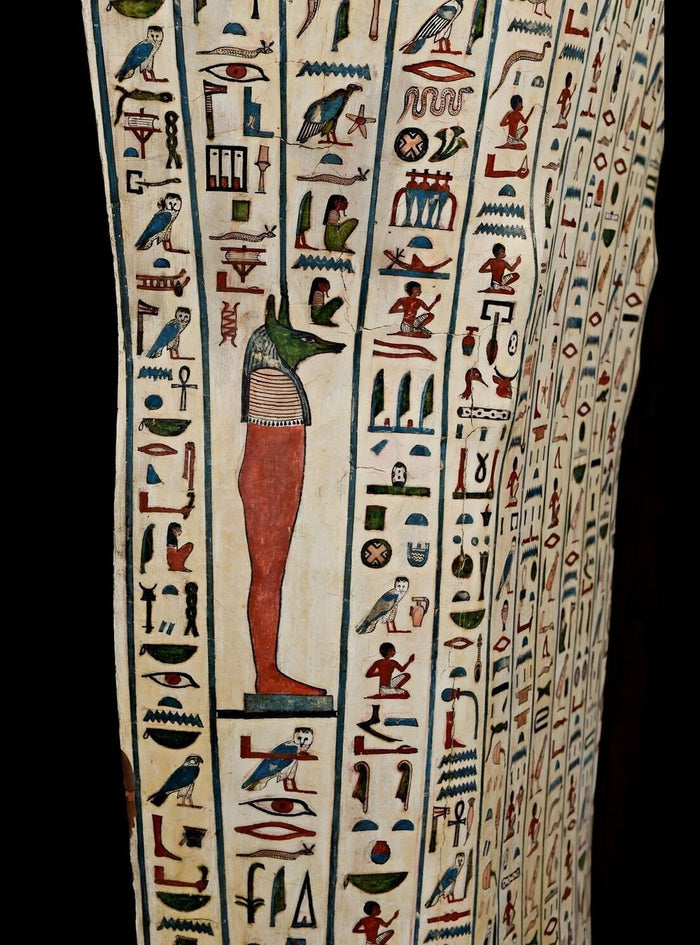
Duamutef, on the side of the sarcophagus.
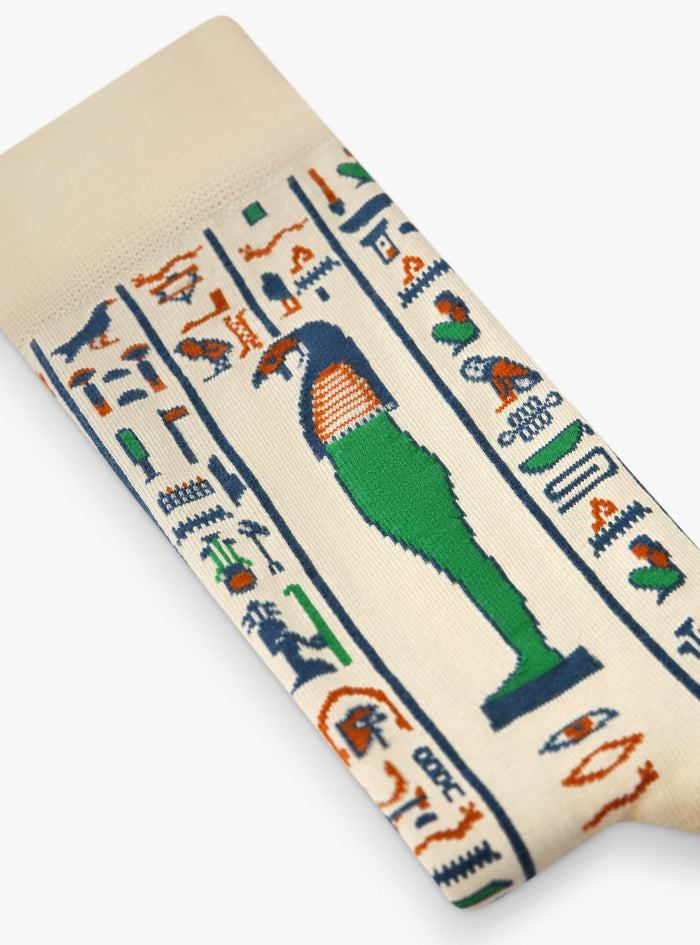
Up close: every square is a stitch.
Rijksmuseum van Oudheden × Kunstsokken

Cream, with two Sons of Horus between columns of hieroglyphs, around the leg.
On the chest of the sarcophagus
Floral Collar
The collar that outlasts death
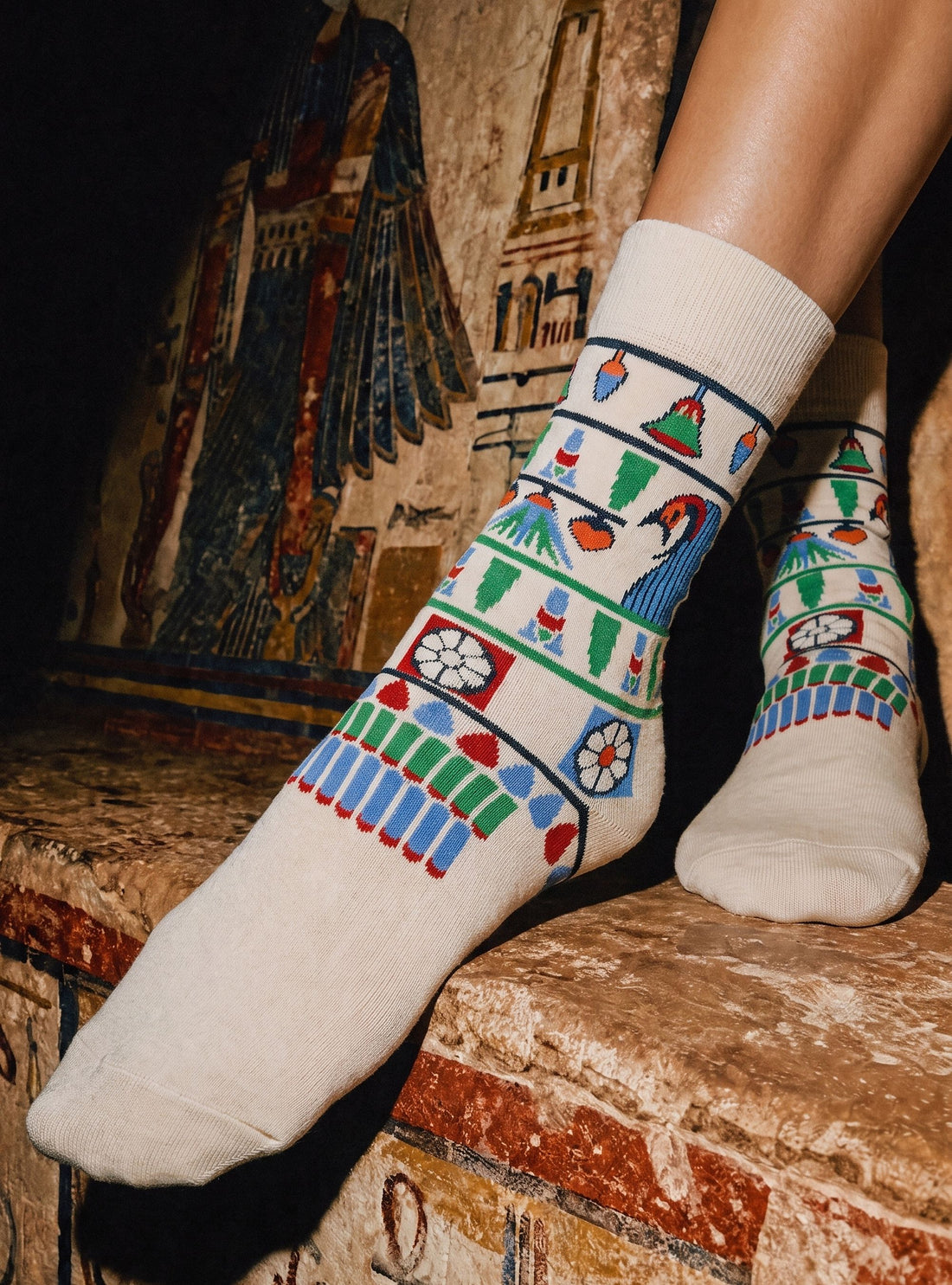
Across Peftjauneith's chest lies a broad collar of flowers. Row after row of lotus buds, petals and rosettes, with a falcon head on each shoulder.
The lotus opens at sunrise and closes in the evening. To the Egyptians it was the sign of new life. Peftjauneith wore this collar on his last journey. Now you wear it around your leg.
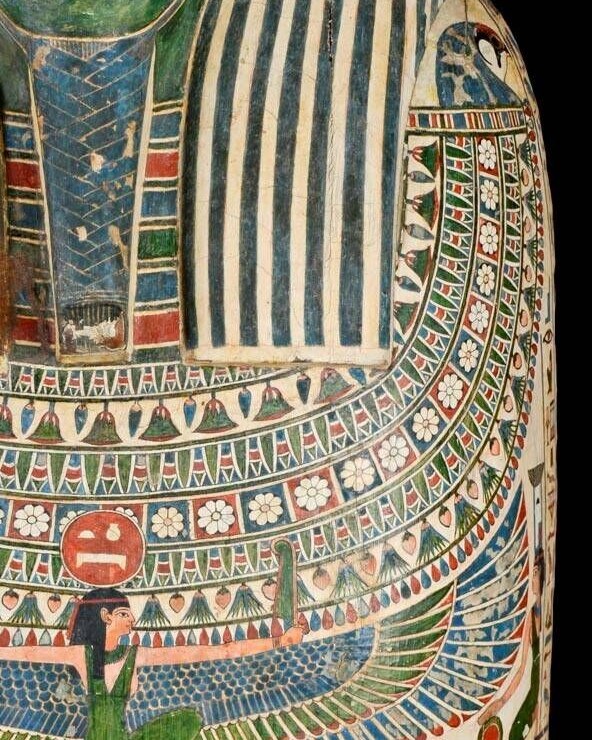
The collar on the lid, with a falcon head on the shoulder.
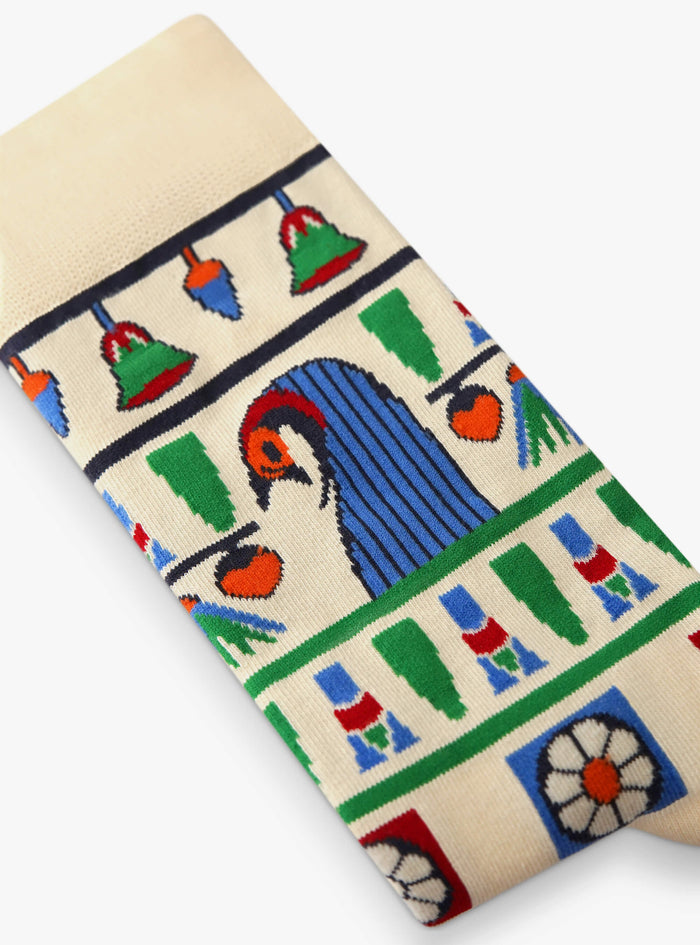
Up close: every square is a stitch.
Rijksmuseum van Oudheden × Kunstsokken

Cream, with the floral collar of the sarcophagus around the leg, down to the instep.
Inside the sarcophagus
Egyptian Birds
The language of the gods
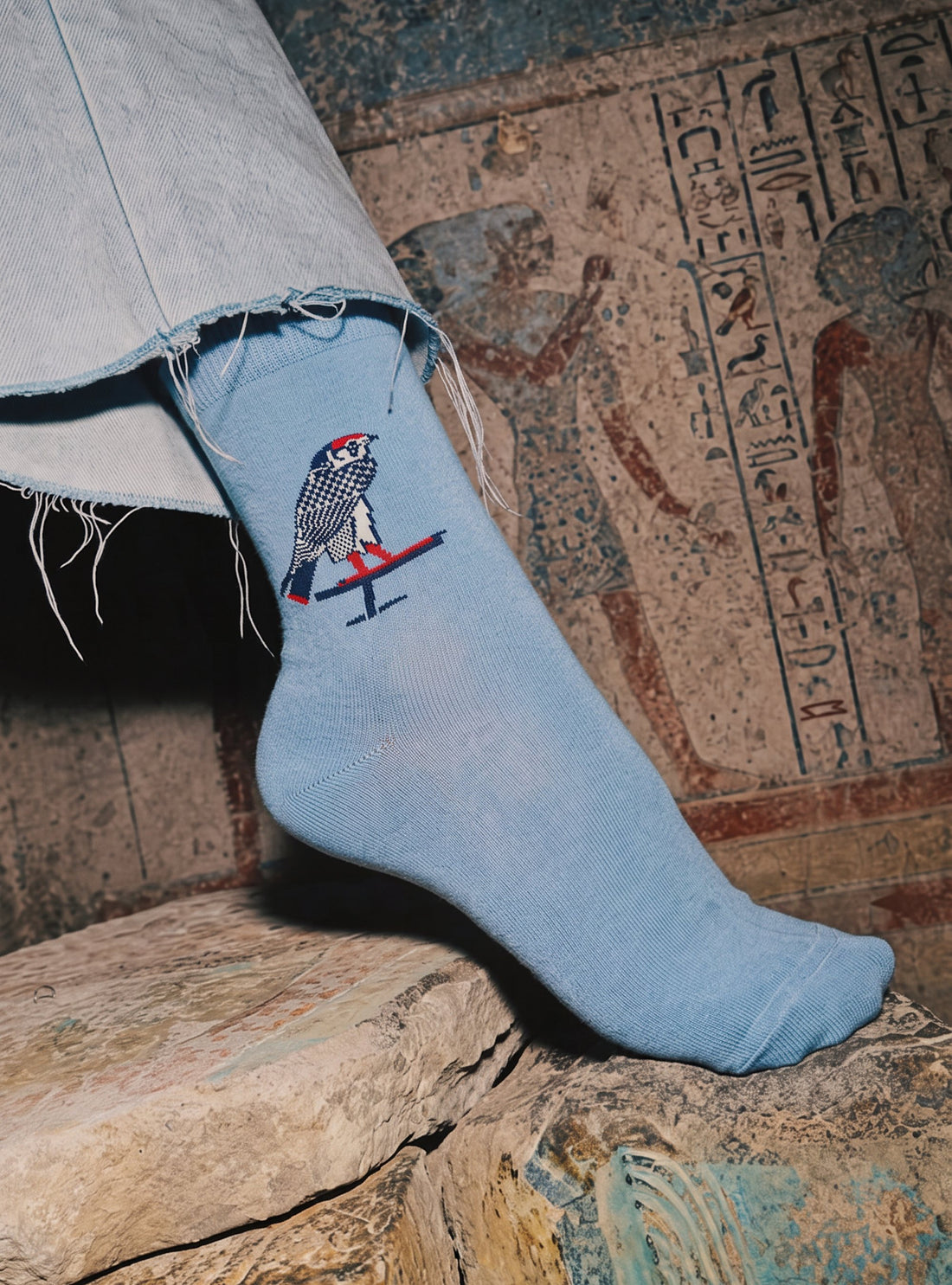
One bird is a direction, the other a letter. The falcon with the feather stands inside the sarcophagus, on the head of the goddess of the West.
Together, falcon and feather form the hieroglyph for ‘West’: where the sun sets and the dead live. The owl is the letter m, the flag next to it the sign for ‘god’. That is how the Egyptians wrote: pictures were words.
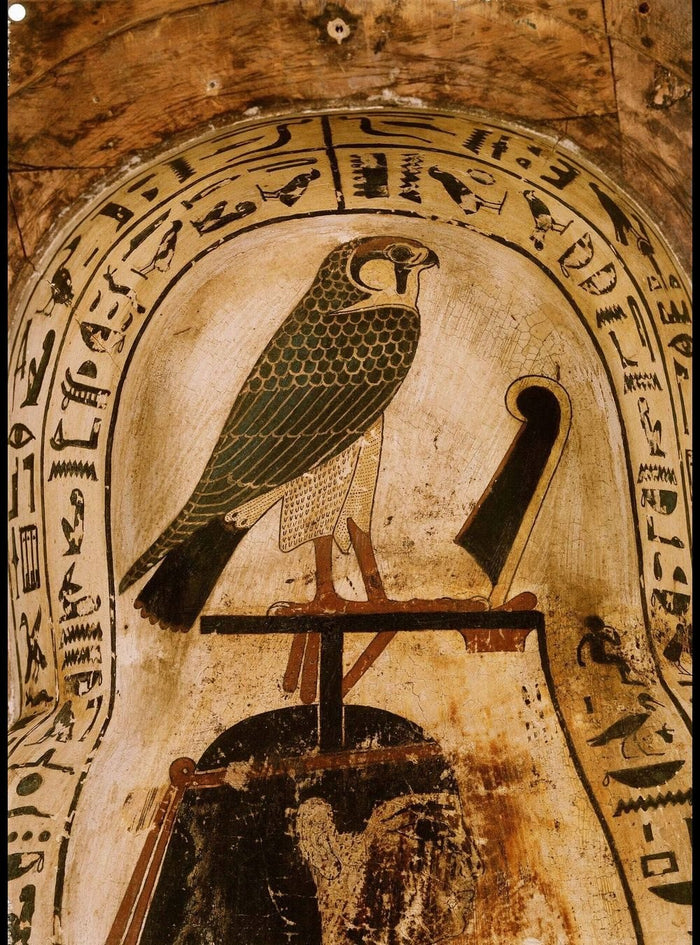
The falcon on its standard, inside the sarcophagus.
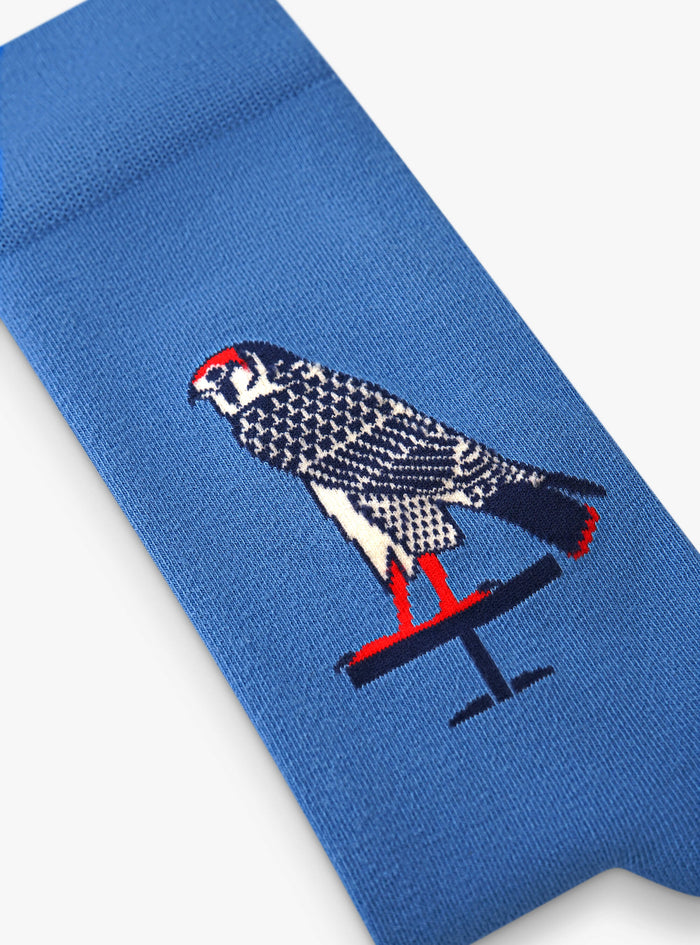
Up close: every square is a stitch.
Rijksmuseum van Oudheden × Kunstsokken

Sky blue, with a falcon and an owl, each on its own side of the leg.
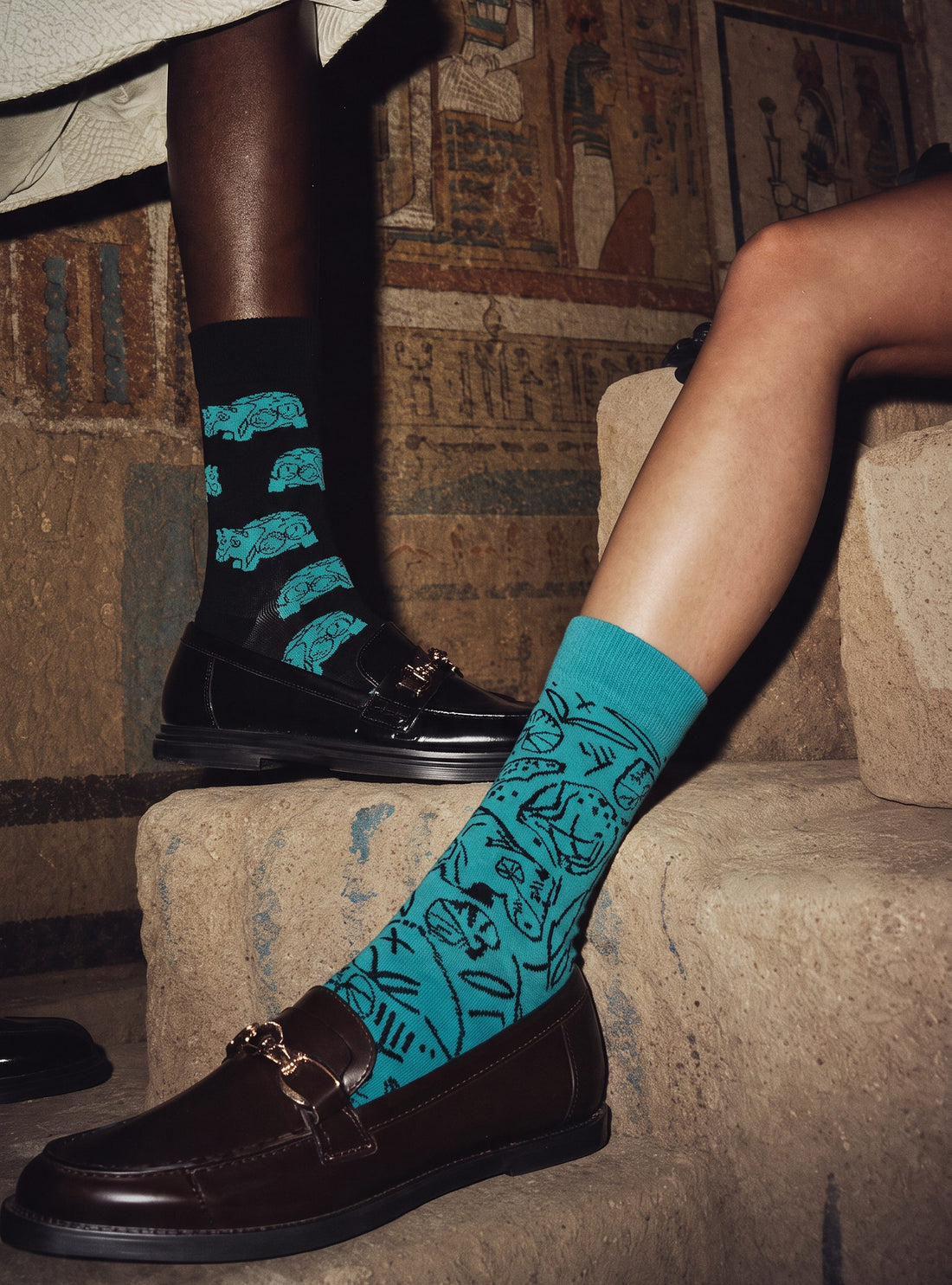
From the same collection
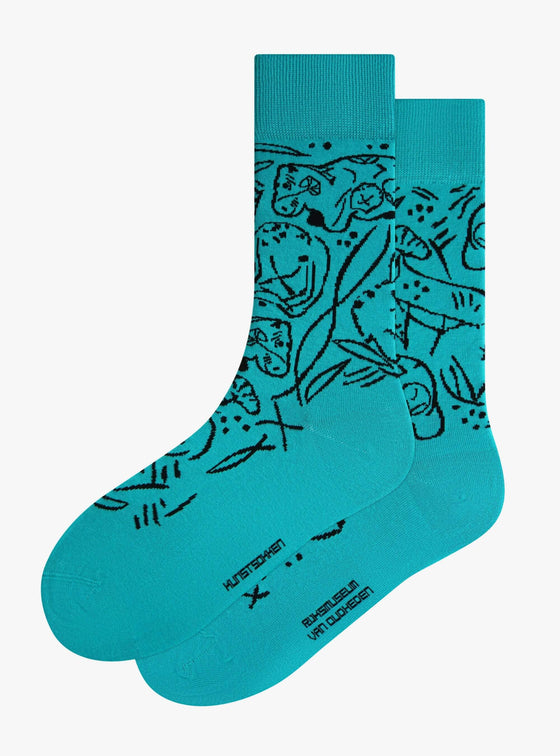
The little hippo
A promise of rebirth
The museum also holds a bright blue faience hippo, almost 4,000 years old. Faience is sometimes called the plastic of antiquity: during firing, copper melted into the glaze and gave it this shine.
Lotus flowers are drawn on its skin, the sign of rebirth. Figurines like this went into the grave. This little hippo has a broken leg. Perhaps on purpose, so the animal could not turn against the dead in the afterlife.
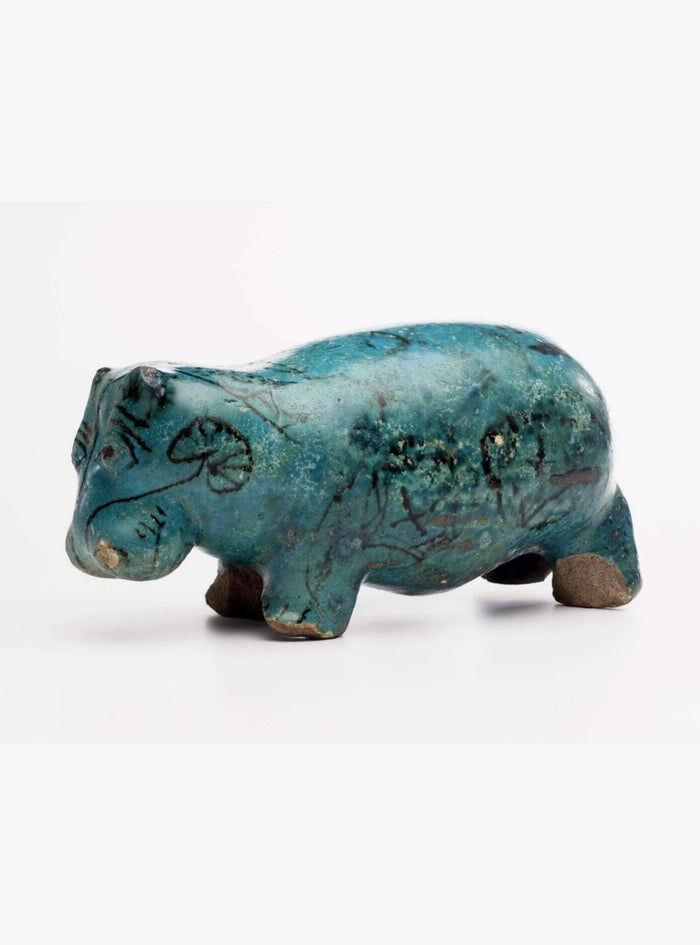
The blue faience hippo, c. 1850 BC.
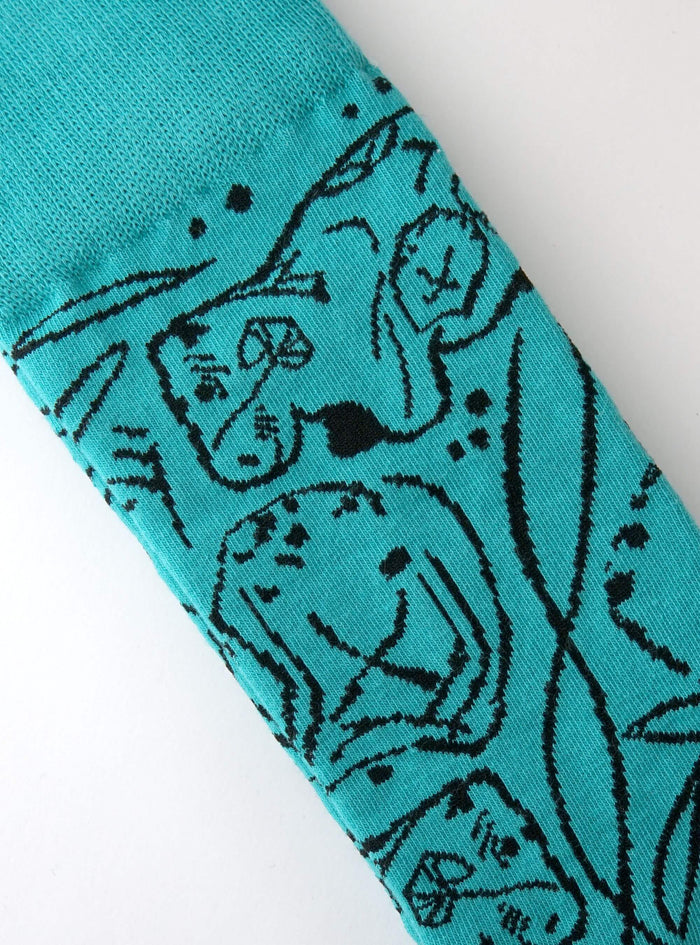
Up close: every square is a stitch.


Also in the museum shop
In Leiden, these socks are sold in the shop of the Rijksmuseum van Oudheden. Here you can order them to your door.
Back to the socksPhotos of the sarcophagus and the hippo: Rijksmuseum van Oudheden, Leiden. The knitted bands come from the real knitting files of the socks.