





































Jan Mankes & Charley Toorop
Four paintings from Museum MORE, now as socks. With an owl that lived with the painter, and a tree that blossomed in the war.
The Museum MORE collection
Four paintings by Jan Mankes and Charley Toorop, knitted into socks of 80% organic cotton. Take all four, or choose your favourite.

 Museum MORE × Kunstsokken
All four in one set
With the owl, the row of trees, the flowering tree and the vase of flowers.
View the set€11,66 per pair
1-year guarantee against holes
Or pick them one by one
Autumn offerChoose 5 pairs, get 2 free. Single pairs count, also together with other socks.


Who was Jan Mankes?
Jan Mankes painted birds, trees and people, quietly and very precisely. He lived in the Dutch countryside, in Friesland and later on the Veluwe, and only lived to be thirty. A rich man from The Hague helped him: Aloysius Pauwels, the boss of a cigar factory. Pauwels sent him paint, books and even live animals to paint. Owls, a falcon, a ferret and a white rabbit.
“I tried to make beautiful things in all simplicity.”
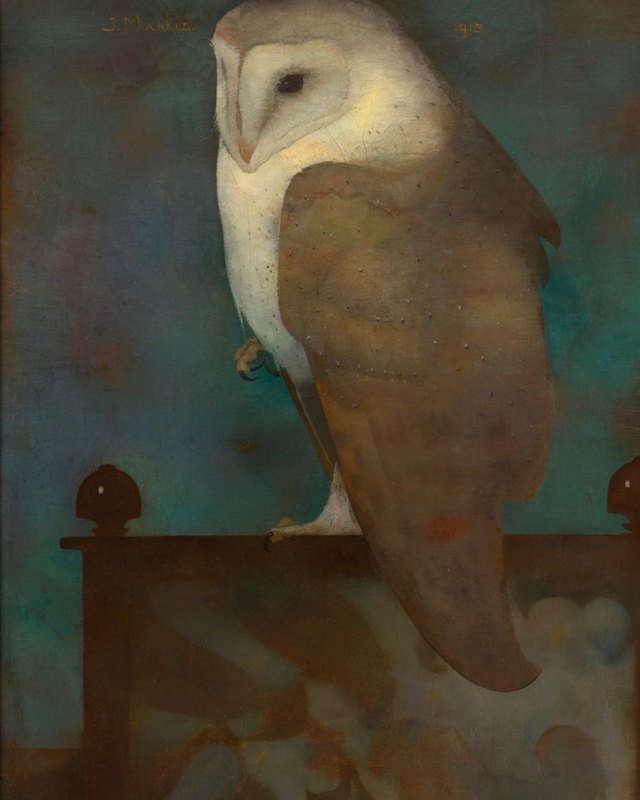
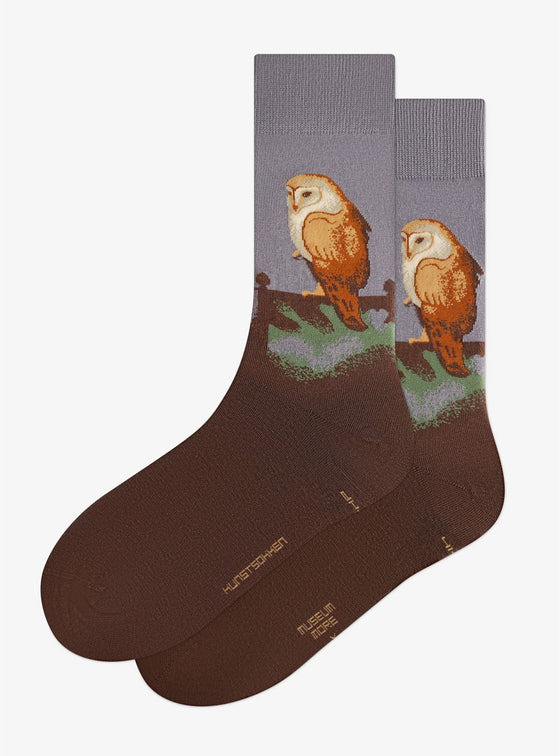
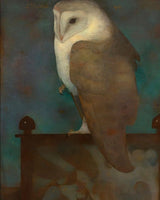
Large Owl on a Screen, 1913. Collection of Museum MORE.
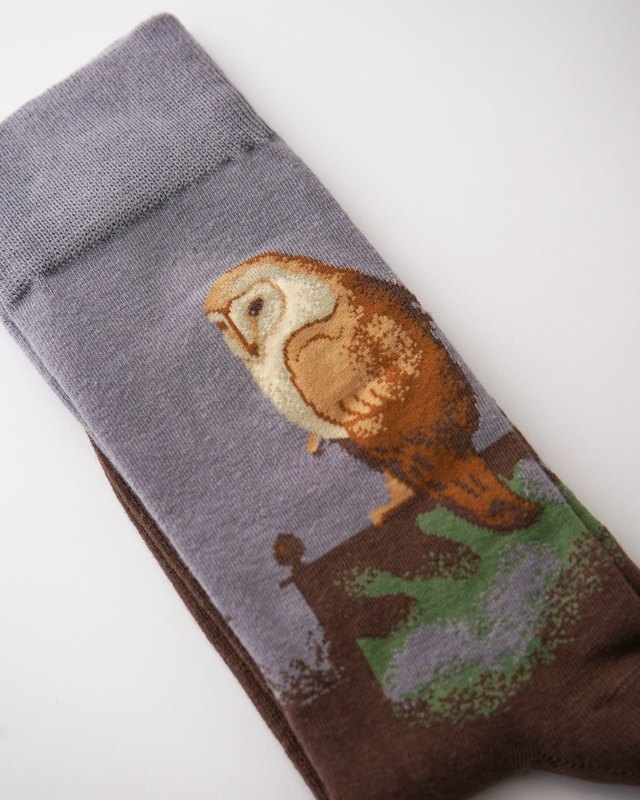
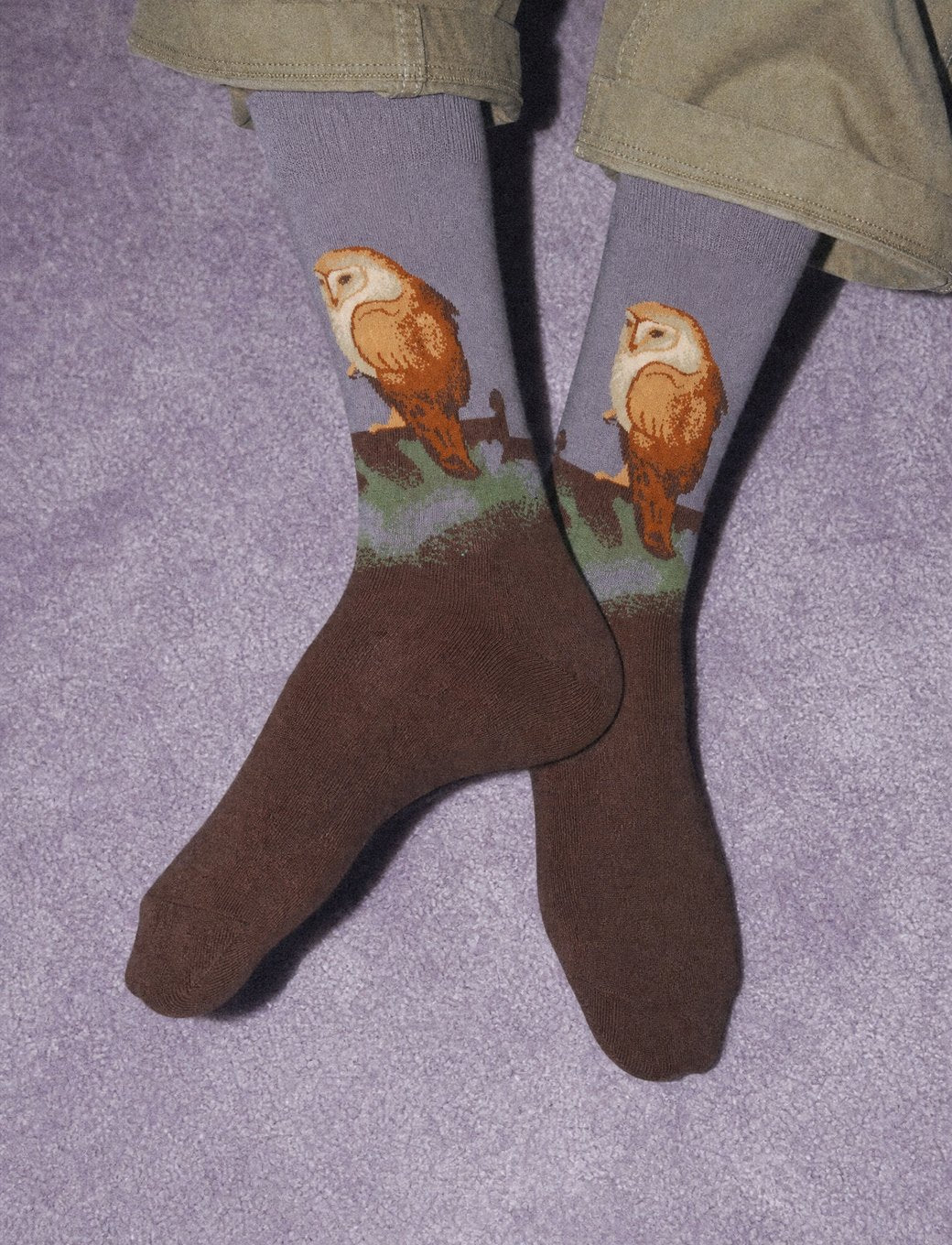
Up close: every square is a stitch.
Friesland · 1913
Large Owl on a Screen
The owl that lived with him
One day there was a barn owl among Pauwels' animals. The owl was very tame. It got a cage in the studio, the room where Mankes painted. That way Mankes could look at it up close.
In the painting the owl sits on a screen. Owls cannot move their eyes, Museum MORE writes. That is why they stare so hard. Mankes painted the moment this owl turned its head towards him.
“This really is the animal of my dreams. Other birds? I don't think about them any more.”
Large Owl on a Screen, 1913. Collection of Museum MORE.
Up close: every square is a stitch.
From the collection of Museum MORE
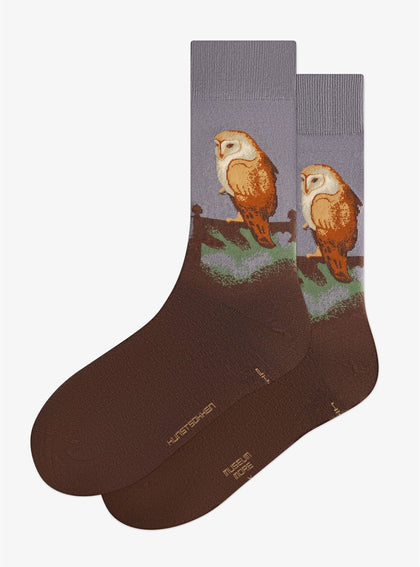
Lilac, with the barn owl on its screen around the leg. The foot is chocolate brown.
View the sock
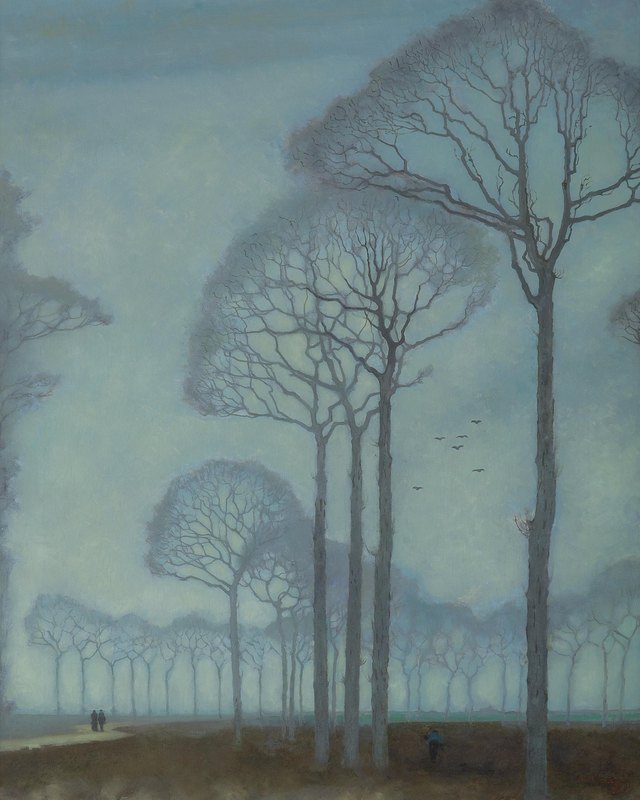
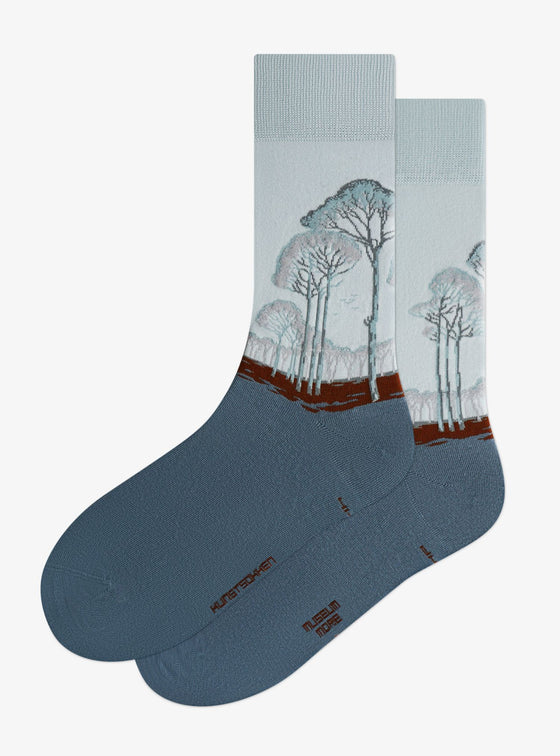
Row of Trees, early 1915. Collection of Museum MORE.
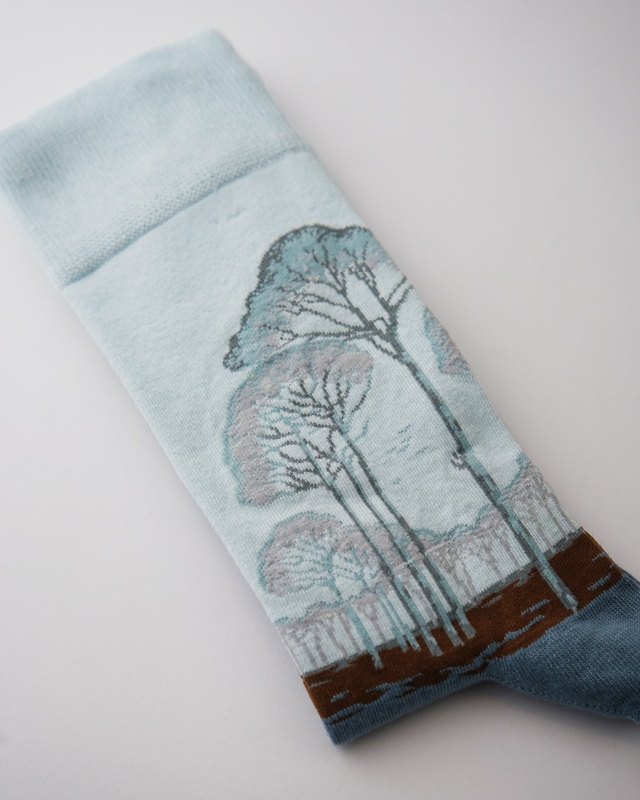
The trees around the leg, the field as a brown border.
Near Heerenveen · early 1915
Row of Trees
A walk with Annie
A sandy road in Friesland, in winter. Mankes painted the oak trees taller and thinner than they really were. That way they look like the pillars of a big church. And look closely: two little people are walking on the path.
Annie Zernike was the pastor of the church the Mankes family went to. She was the first woman pastor in the Netherlands. In September 1915, a few months after this painting, Jan and Annie got married. After that she stopped working as a pastor.
“There go Jan and Annie, the painter and his wife.”
Row of Trees, early 1915. Collection of Museum MORE.
The trees around the leg, the field as a brown border.
From the collection of Museum MORE
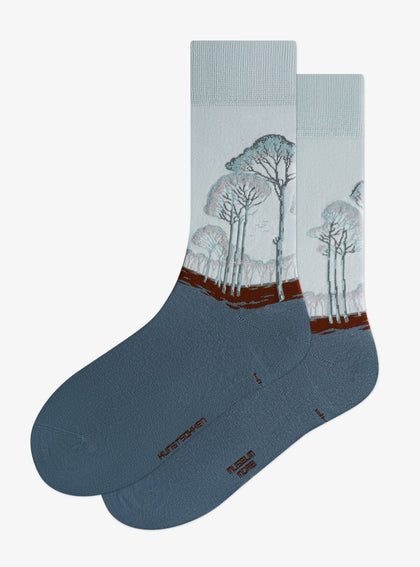
Ice blue, with the tall trees around the leg and a brown field as a border. The foot is grey blue.
View the sock
Who was Charley Toorop?
At first Charley wanted to be a singer. She taught herself to paint and chose art in 1917. She painted farmers, friends and above all herself: at least seventeen times. She always started a face with the eyes.
“I have always gone my own way.”
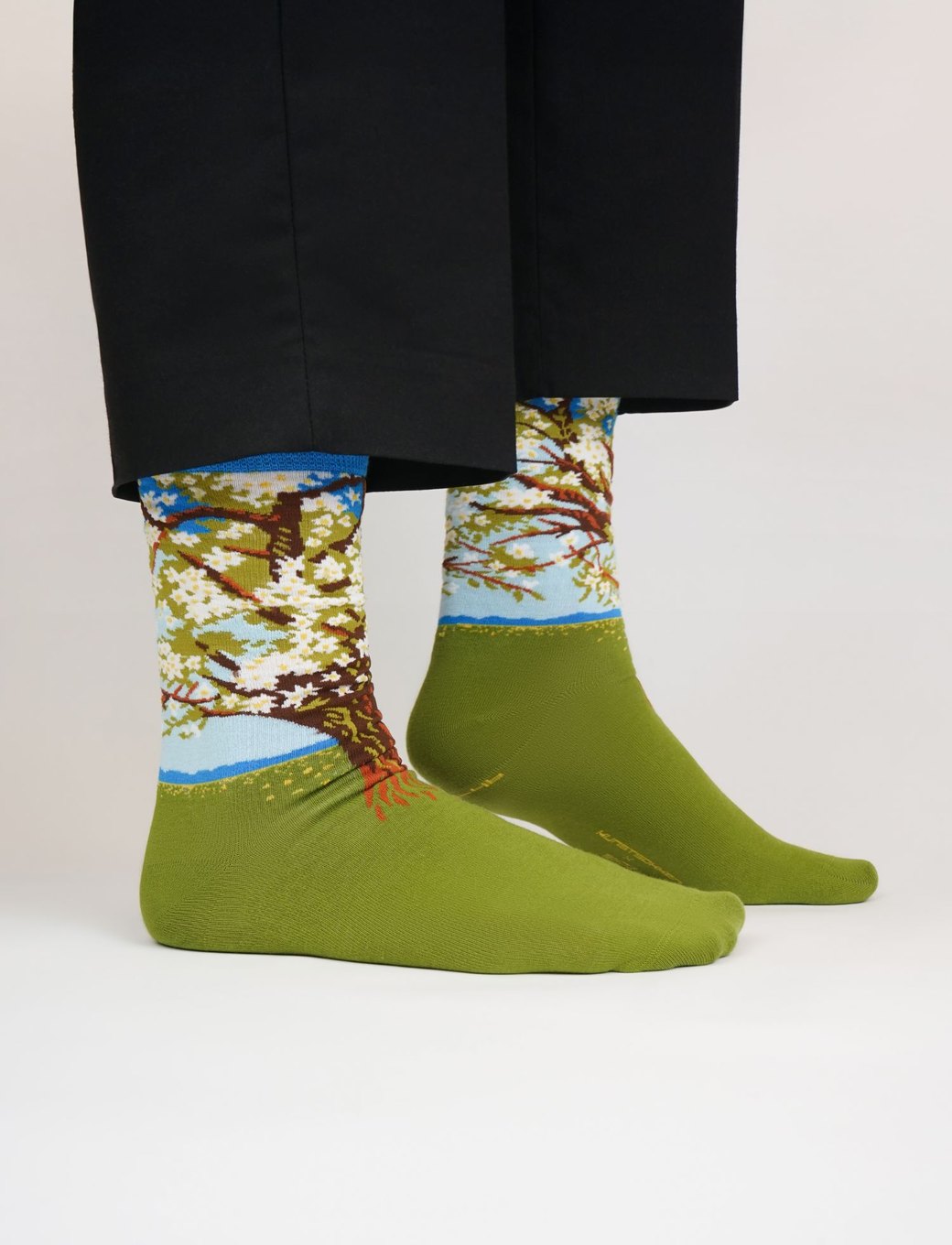

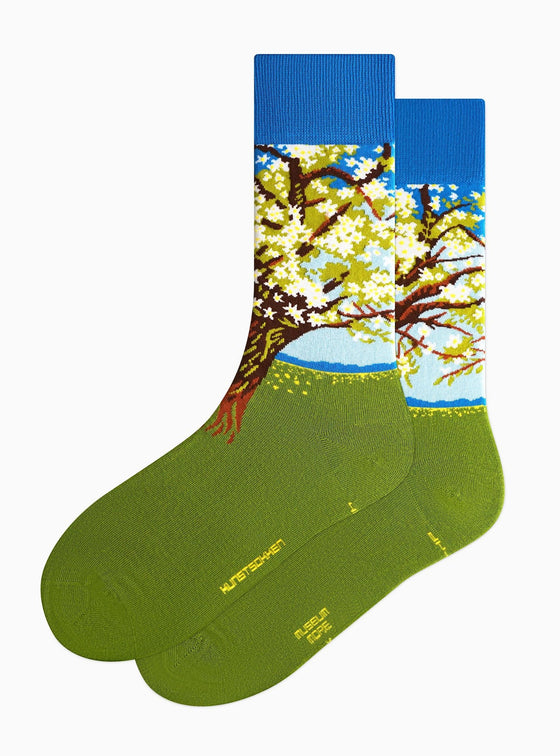
Beemster, Flowering Tree, 1943. Collection of Museum MORE.

The blossom around the leg, the green fields on the foot.
The Beemster · 1943
Beemster, Flowering Tree
A secret on the back
It is wartime. In 1943 the Germans make Bergen a forbidden zone, because there is an airfield nearby. Charley Toorop has to leave her house. For two and a half years she stays with other people, also in the Beemster, a flat farming area north of Amsterdam.
The Germans want all artists to join their club, the Kultuurkamer. Charley says no. Now she is not allowed to show or sell her work. To stay out of trouble, she sometimes writes an older year on a painting. She painted this tree in 1943. On the back it says 1940.
“I just improvise. I do it every spring.”
Beemster, Flowering Tree, 1943. Collection of Museum MORE.
The blossom around the leg, the green fields on the foot.
From the collection of Museum MORE
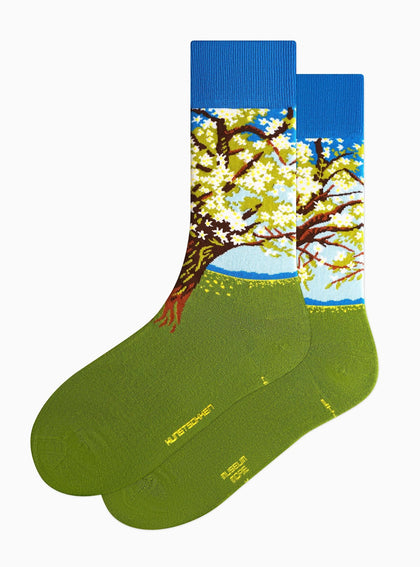
White blossom and light blue sky around the leg, the green fields on the foot. The band at the top is deep blue.
View the sock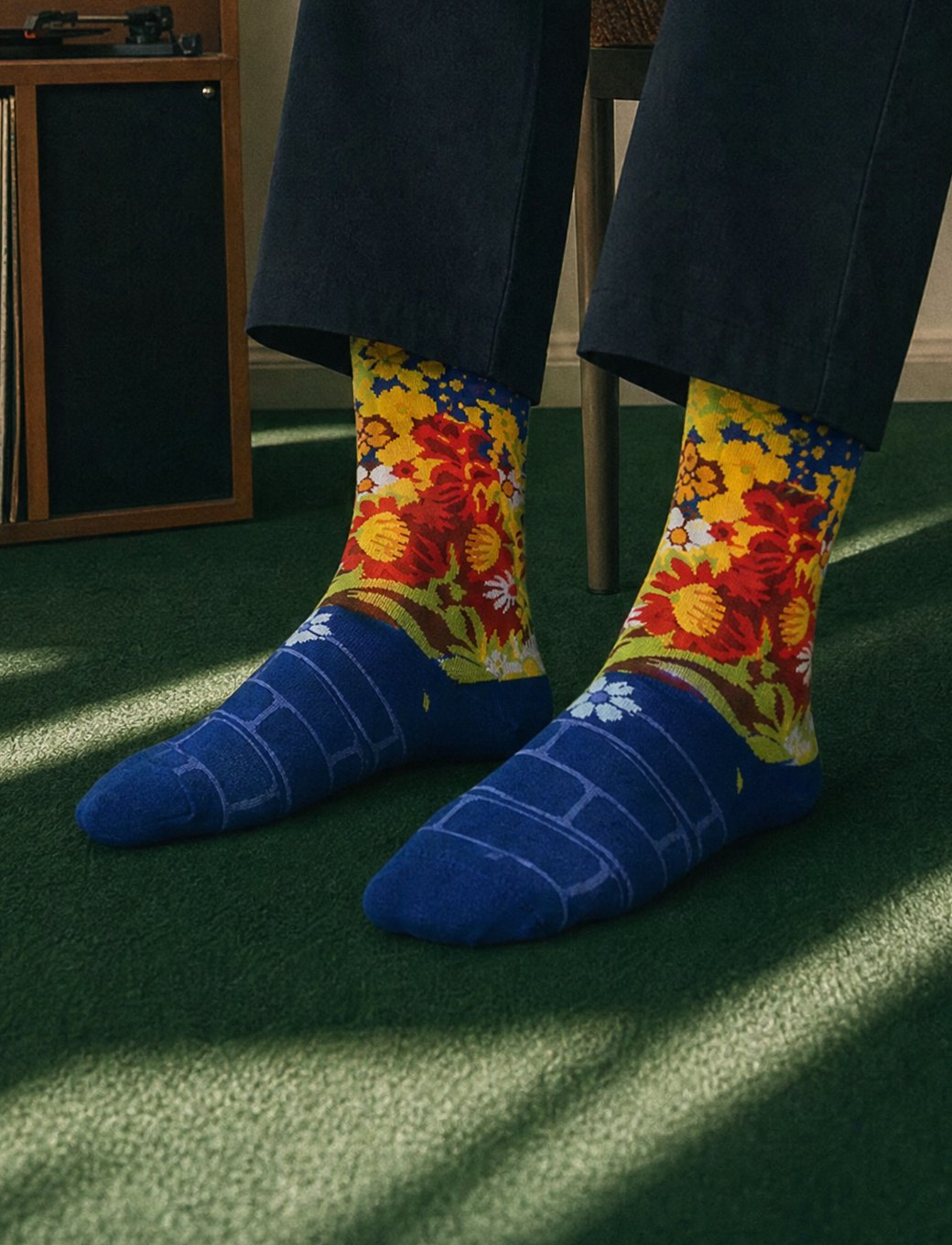
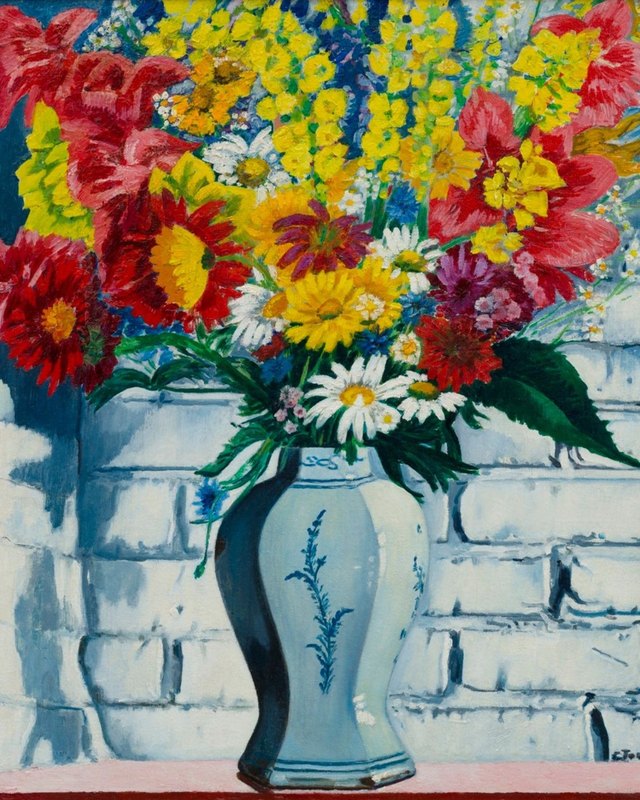
Vase with Flowers against a Wall, 1951. Collection of Museum MORE.

The bunch of flowers around the leg, the wall in blue on the foot.
Her sixtieth year · 1951
Vase with Flowers against a Wall
She kept on painting
In 1946 and 1947 Charley Toorop becomes very ill, twice. After that she cannot move or talk as well as before. Still she keeps painting, a few hours every day. She paints this bunch of flowers in 1951, the year she turns sixty.
She did not paint flowers often. She was best known for paintings of herself, in which she looks straight at you. Behind this vase is a white stone wall. It keeps the bright colours calm, Museum MORE writes.
“I do everything from nature.”
Vase with Flowers against a Wall, 1951. Collection of Museum MORE.
The bunch of flowers around the leg, the wall in blue on the foot.
From the collection of Museum MORE

Dark blue, with the bunch of flowers around the leg. On the blue foot, the brick wall is drawn in light lines.
View the sock


See them in real life
Museum MORE is in the old town hall of Gorssel, in the east of the Netherlands. MORE stands for MOdern REalism: art that shows what the painter really saw. The museum has three places: Gorssel, Ruurlo Castle and MORE Twickel in Delden. There is always work by Jan Mankes at Twickel. Where the four paintings hang right now, you can see on the museum's website. The museum itself sells these socks too.
Back to the socksPaintings: collection of Museum MORE. Self-portrait with owl (1911): Museum Arnhem. Self-portrait Charley Toorop (1928): Museum Boijmans Van Beuningen. Photo MORE Gorssel: Arend, CC BY 2.0. The knitted bands come from the real knitting files of the socks.