




























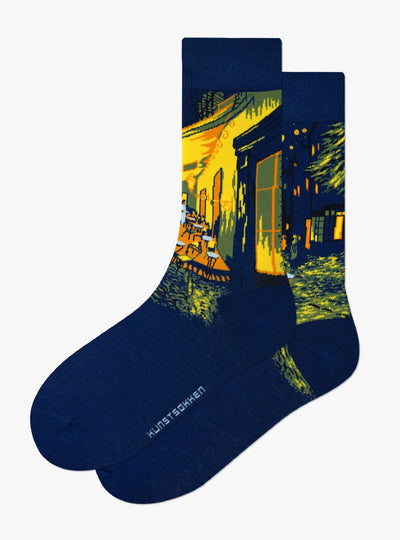
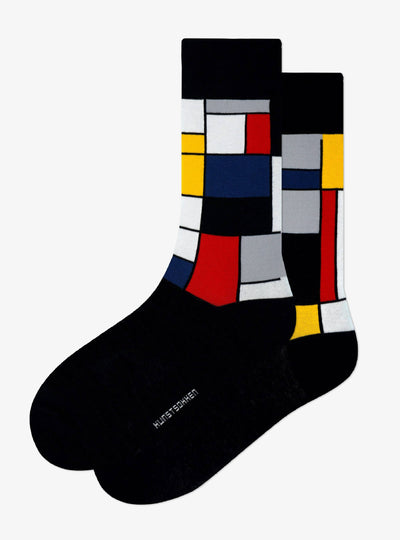
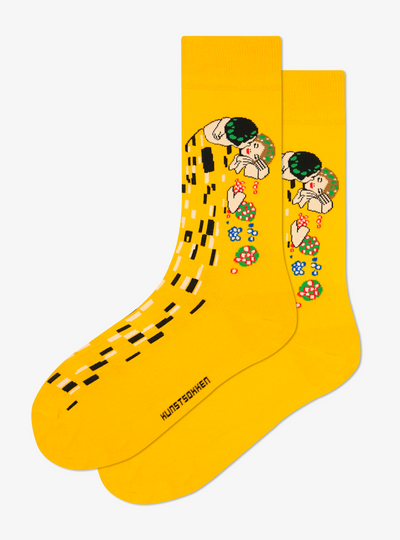
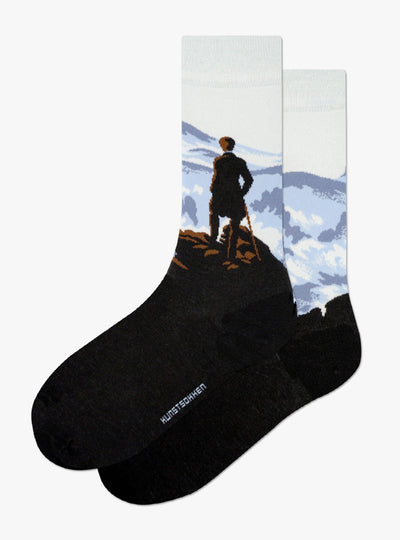


Limited edition · 700 pairs per design
The landscape he watched disappear
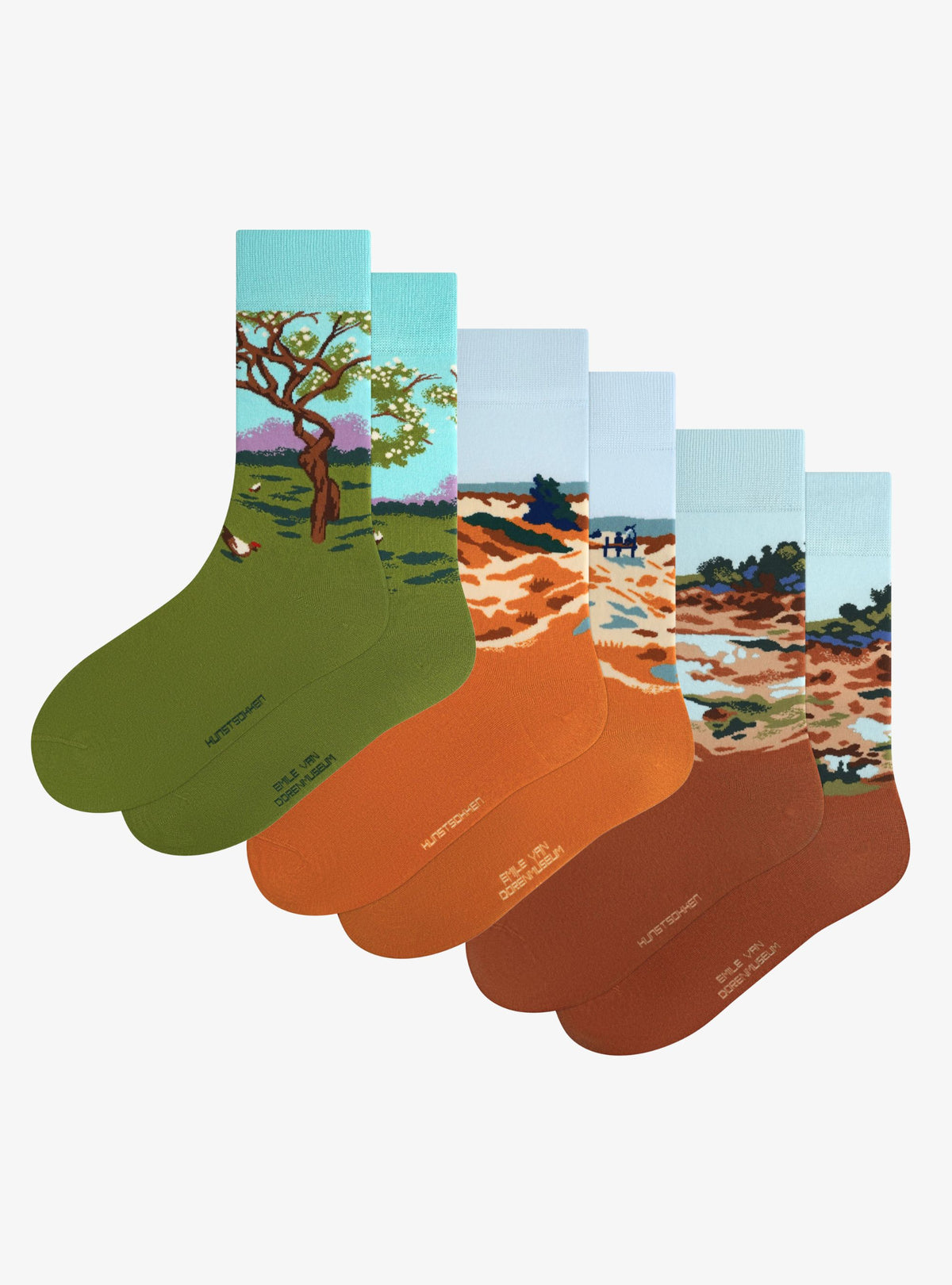
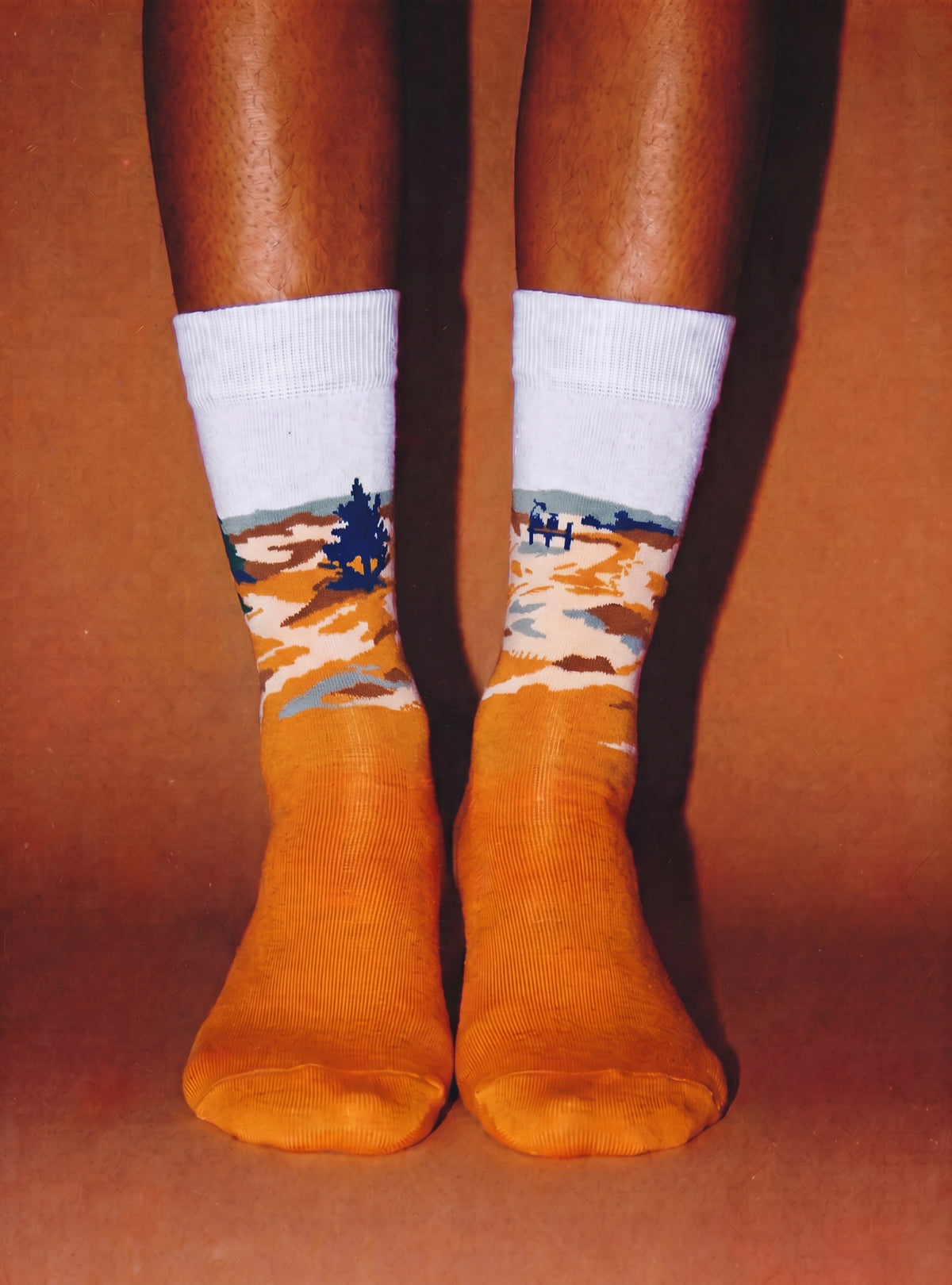
Three Kempen landscapes by Emile Van Doren, from his own house in Genk. Knitted into organic cotton, in a one-time edition of 700 pairs per design.
Shop the collection
Genk, 1901
He painted it because he could see it going
Emile Van Doren came to Genk in the early 1890s as a young painter from Brussels and never really left. From then on he painted one subject: the heath, the marshes and the sand dunes around the village. Outdoors, with loose, quick strokes.
In August 1901, coal was found under Belgian Limburg. Within a few decades the quiet farming village would grow into what the museum calls the third-largest industrial pole of Flanders. Van Doren watched it happen. He did not just paint through it: he took a seat on the Royal Commission for Monuments and Landscapes and became an advocate for the landscape he painted.
The end of that story is not a lament. A good part of that heath is protected today as the Hoge Kempen National Park. And the museum counts painters like Van Doren among the people who first made the case for it.
He painted it because he could see it going. And that painting is part of why some of it is still there.
Three works, three socks
From the museum's collection
All three are oil on canvas, from the collection of the Emile Van Dorenmuseum in Genk. The colours of each sock come from the painting.

Design 1
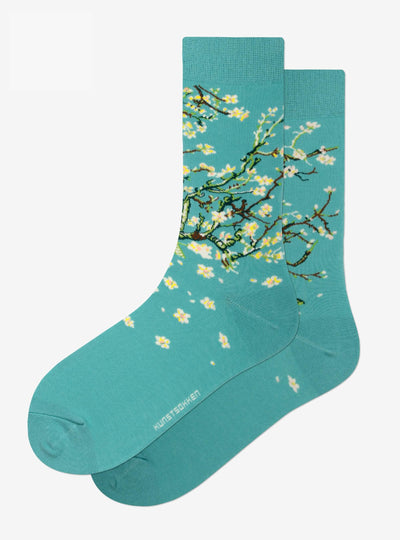
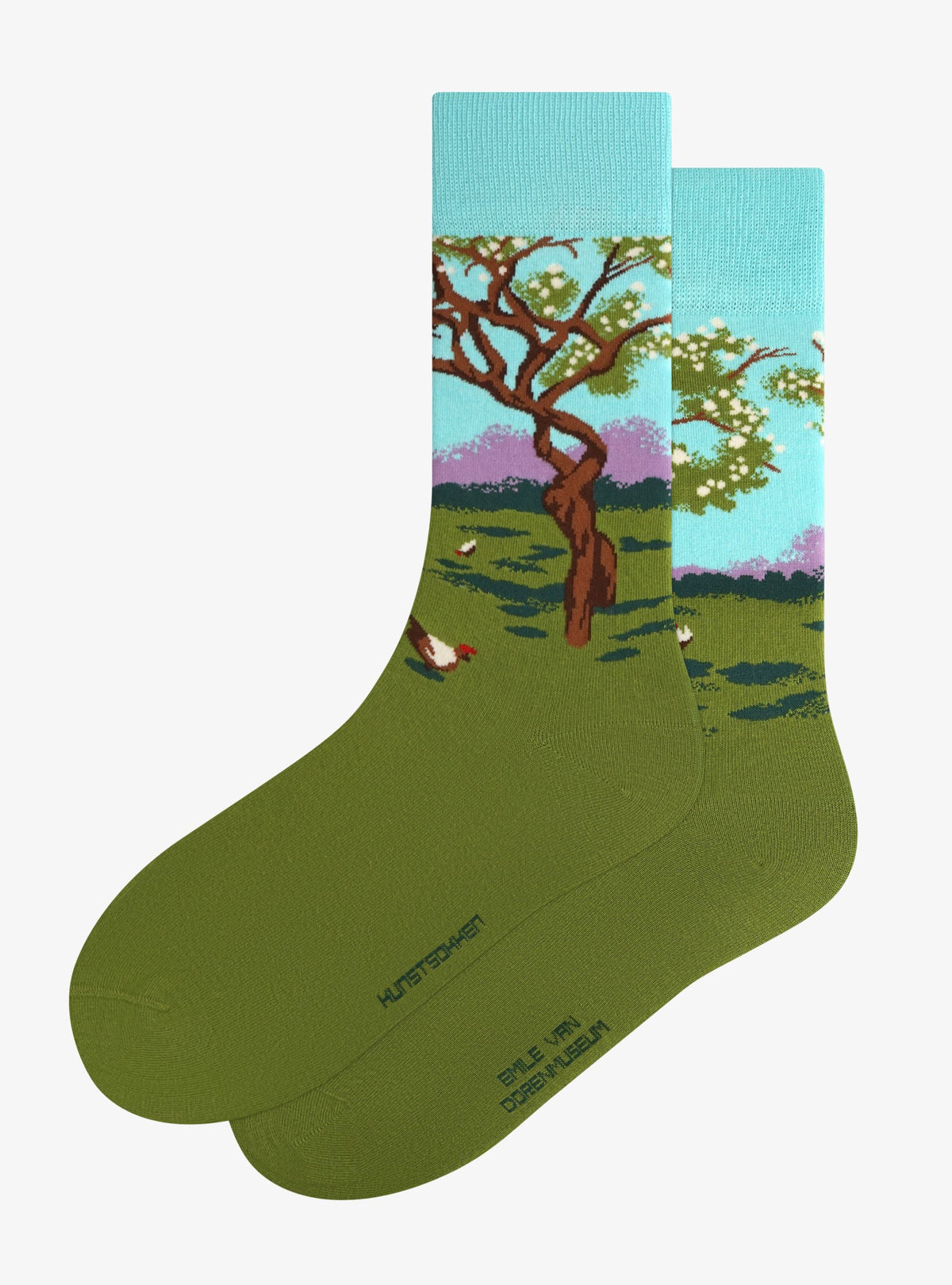
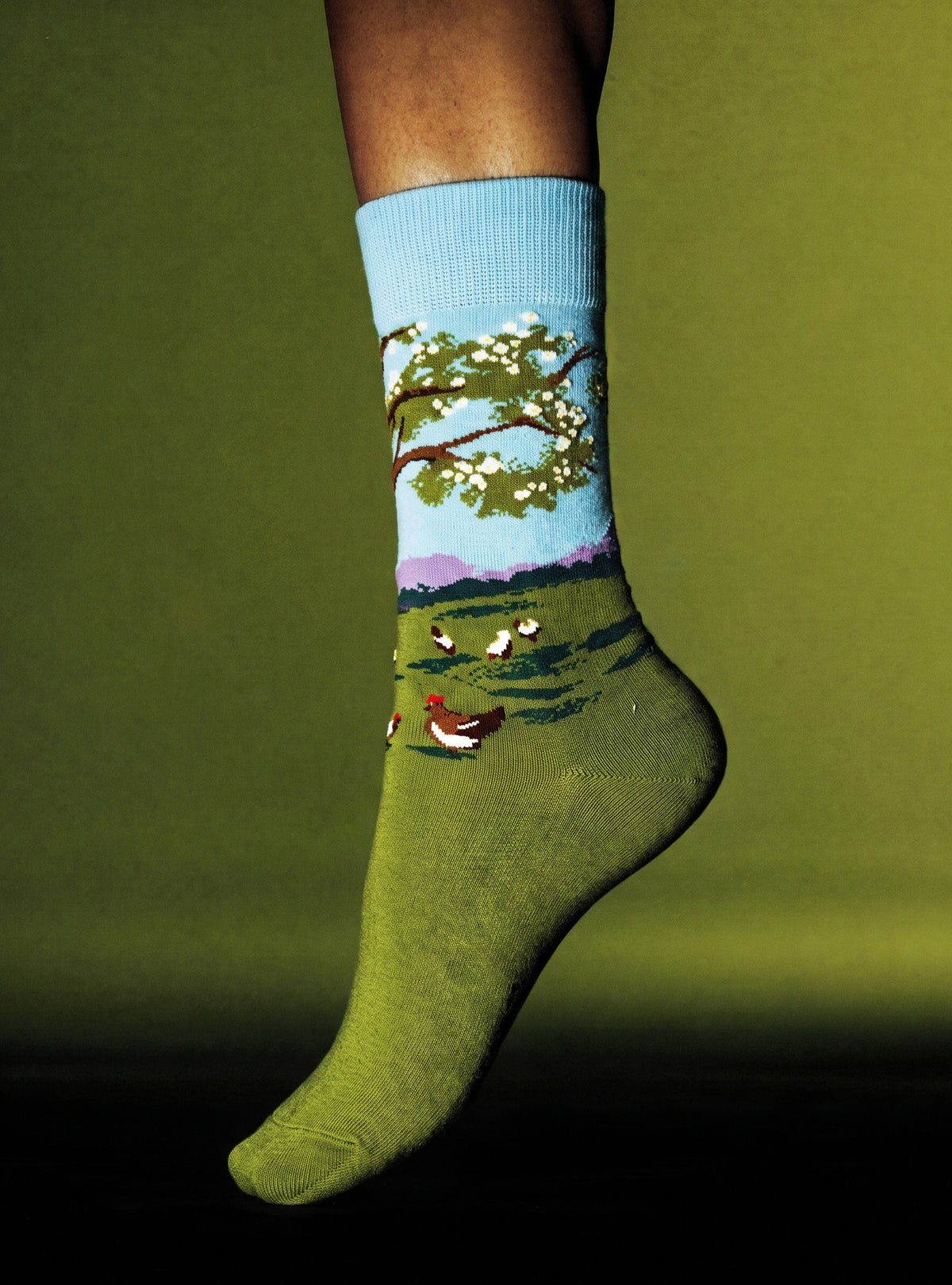
Orchard in Bloom
after “Verger en fleurs”
Fruit trees in blossom, hens scratching in the grass underneath. The lightest and warmest of the three.


Design 2
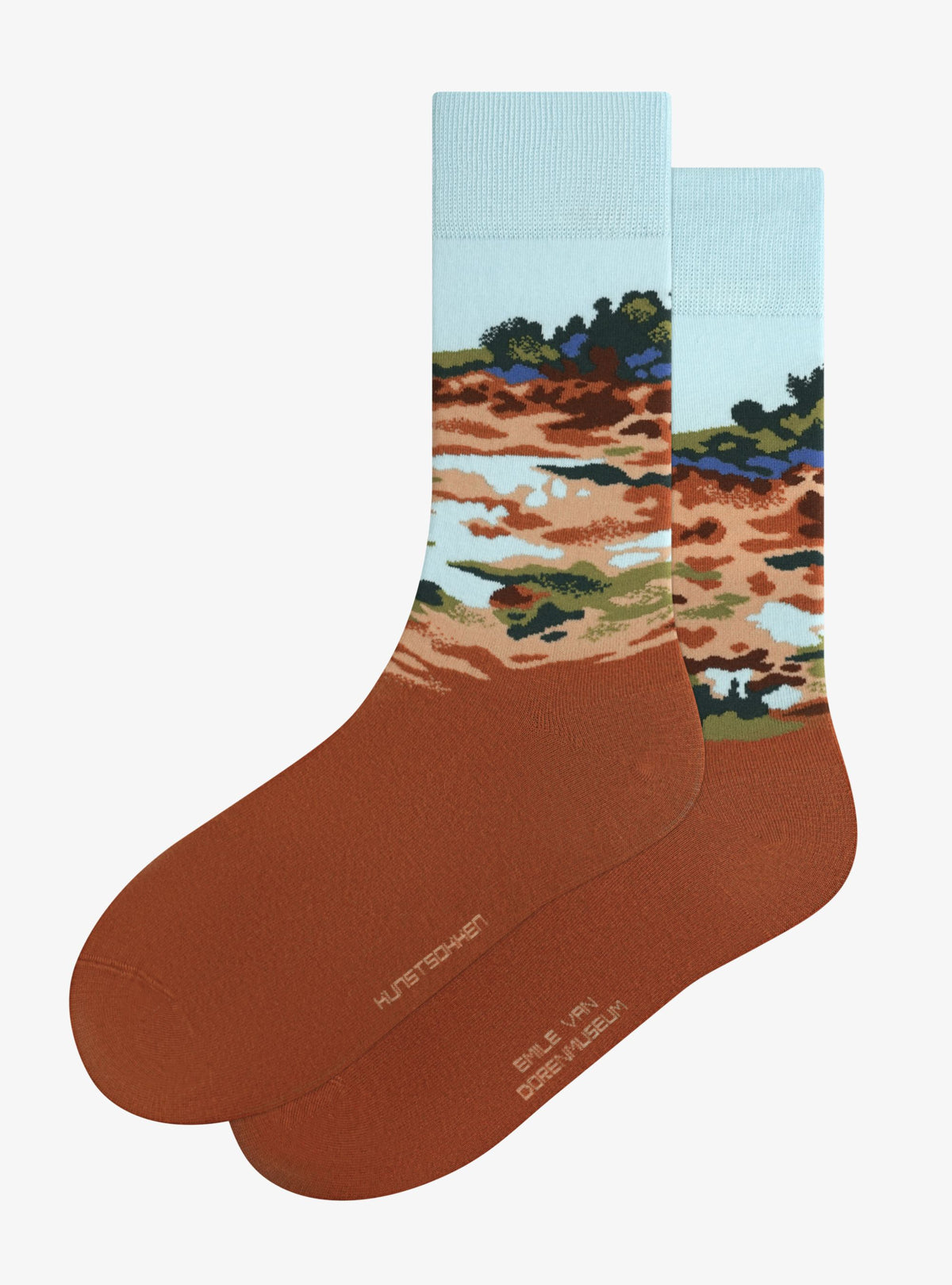
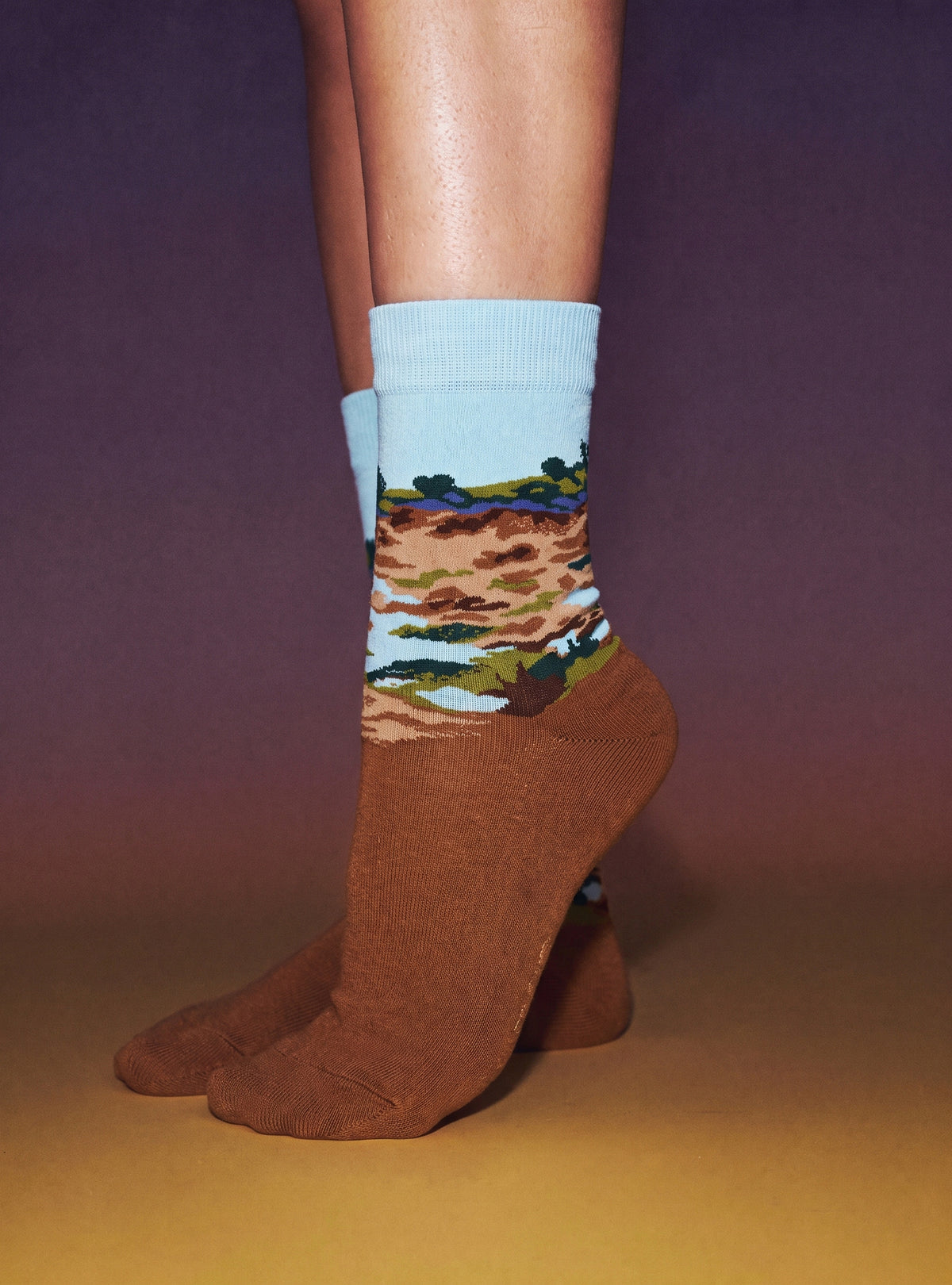
Bog Myrtle in Bloom
after “La fleurison de myrica”
A marshy heath where the bog myrtle flowers, in April and May, with golden catkins. The museum describes it itself: a dark palette, royal-blue strokes, pale-blue pools reflecting the light and a big cloud mass, laid in with rough, sketchy strokes. The most atmospheric of the three.


Design 3
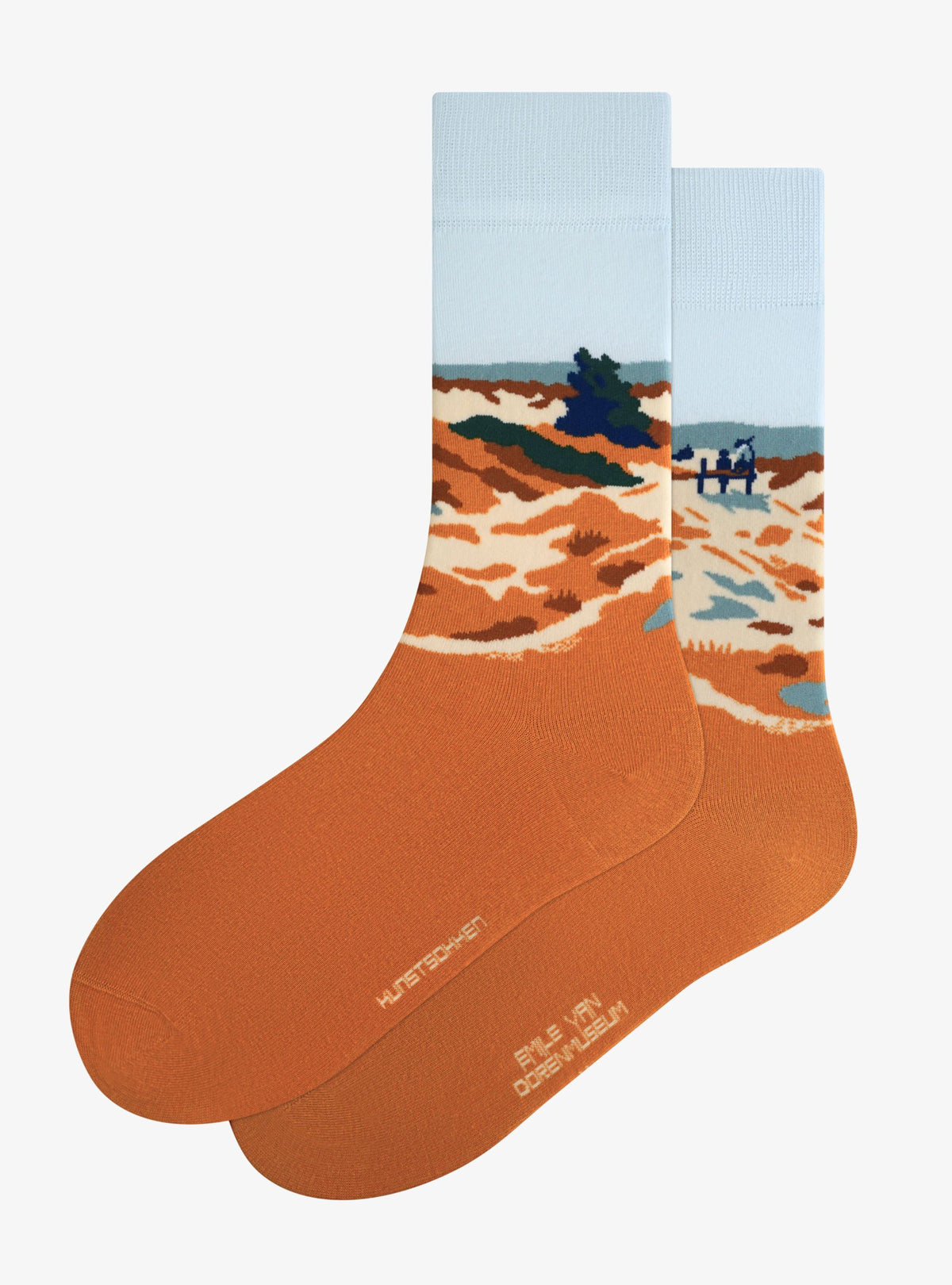
Country Road with Horse and Cart
after “Landkar op weg”
A wide, panoramic canvas: a sand track through open heath, a farm cart with two figures in the distance, one dark pine. The emptiest and most “big sky” of the three.

The designs
Pick your pair
700 pairs per design · two sizes


No products match these filters.
Filter & sort
Who was Emile Van Doren
From Brussels to the heath, and never back
-
1865
Born in Brussels on 14 April, into a butcher's family. Enrols in pharmacy at the ULB and secretly signs up at the Académie des Beaux-Arts as well.
-
1892
Wins the Prix Donnay, the Brussels academy's landscape prize.
-
1893
Registers as a resident of Genk. He falls for two things at once: the Kempen landscape and Cidonie Raikem, who runs an inn on the Stationsstraat.
-
1898
Marries Cidonie. Together they turn the inn into the Hôtel des Artistes, where every visiting painter stays.
-
1901
In August, coal is found under Belgian Limburg. Genk begins a second life.
-
1913
Builds his own villa with a studio: Le Coin Perdu.
-
Co-founder of the Société Royale des Beaux-Arts in Brussels, alongside Constantin Meunier, Fernand Khnopff and Joseph Coosemans. Leopold II buys his work early; Albert I and Queen Elisabeth never miss an exhibition; King Baudouin later hangs a Van Doren in his office at Opgrimbie.
-
1949
Dies in Genk on 19 May.
-
1976
Le Coin Perdu opens as the Emile Van Dorenmuseum.
-
2016
Genk joins the European network of historic artists' colonies.
-
2026
On 6 September the museum celebrates its fiftieth anniversary. A week later, three of his works appear on socks.
Emile Van Dorenmuseum, Genk
The museum is his house
The Emile Van Dorenmuseum is the painter's house: villa Le Coin Perdu, built in 1913 with a studio, a museum of the city of Genk since 1976. It calls itself a house of landscape and art and tells, alongside Van Doren, the story of the Genk artists' colony. Between 1840 and 1940 hundreds of landscape painters came to Genk, among them Anna Boch, Emile Claus, Théo van Rysselberghe and Emile Bernard. Van Doren was the first to stay.
The museum garden adjoins the Molenvijverpark and is open day and night.

From canvas to sock
Knitted in, not printed
Knitted in stitch by stitch. No ink on the sock, so nothing that can fade or crack.
Foot and cuff of each design are picked from the canvas: moss green, camel and ochre for the ground, sky blue and light blue for the sky.
GOTS-certified and 100% seamless, with a reinforced heel and toe.
The same small workshop as all our socks, which we visit every year. A one-year guarantee on every pair.
Once they're gone, they're gone
Each design is a one-time edition of 700 pairs. There will be no reprint. Once a design sells out, it disappears from this page.